Making fudge at home is one of those jobs that asks you to slow down. You stand at the hob with a wooden spoon and stir. The sugar dissolves. The mixture comes up to a steady boil. For fifteen or twenty minutes you can't really do anything else, and the kitchen fills with a warm, buttery smell that supermarket fudge can't begin to match.
Scottish fudge has been made this way in home kitchens for generations. The recipe hasn't changed because there's no need. Sugar, butter, milk, patience. What you get at the end is richer and creamier than anything on a shop shelf, and there's a quiet satisfaction in having made it yourself.
This is the traditional method written out properly. Half an hour of active work, a couple of hours to set. A sugar thermometer makes things easier but is not essential.
What You'll Need
A heavy-bottomed pan matters. Thin pans scorch sugar in seconds and you'll taste it. You also need a wooden spoon for stirring and later for beating, a sugar thermometer if you have one, and an 18cm square tin lined with baking parchment.
Ingredients
- 450g granulated sugar
- 150ml whole milk
- 100g unsalted butter, cut into small cubes
- 1 × 397g tin of condensed milk
- 1 tsp vanilla extract
- A pinch of salt (optional, but it lifts the flavour)
Six ingredients, one of them optional. Use the best butter you can afford. It really does make a difference to the finished fudge.
Method
1. Prepare your tin
Line an 18cm square tin with baking parchment. Let the parchment hang over the sides so you can lift the set fudge out easily later. Set the tin somewhere close to the hob.
2. Melt everything together
Put the sugar, milk, butter and condensed milk into your heavy-bottomed pan. Place on a low heat and stir constantly with a wooden spoon. The sugar needs to dissolve completely before the mixture comes to a boil. If there are sugar crystals still present when it boils, they'll grow as it cooks, and you'll end up with grainy fudge. Be patient at this stage. It takes 5 to 10 minutes.
A good test: run the back of your spoon against the side of the pan. If you feel any grittiness, the sugar hasn't dissolved yet. Keep going.
3. Bring to a boil
Once the sugar is fully dissolved, turn the heat up to medium and bring the mixture to a steady, rolling boil. Keep stirring. Condensed milk catches on the bottom of a pan quickly and burnt fudge is a waste of a good evening. A long-handled spoon saves your knuckles.
4. Cook to soft-ball stage
This is the slow bit. You're cooking the mixture to 116°C (240°F), known as the soft-ball stage. It usually takes 10 to 15 minutes of steady boiling. Don't rush it by turning the heat up.
No thermometer? Drop a small spoonful of the mixture into a glass of cold water. If it forms a soft, pliable ball you can pinch between your fingers, you're there. If it dissolves or spreads thinly, keep cooking.
5. Beat it
Take the pan off the heat. Stir in the vanilla and the pinch of salt if you're using it. Now beat the mixture vigorously with your wooden spoon for about five minutes. Two things happen as you beat: the glossy sheen fades to a matt finish, and the mixture thickens noticeably.
The beating is what turns sugar syrup into fudge. It breaks up any sugar crystals and gives you that smooth, creamy texture. Skip it and you get something closer to toffee.
6. Pour and set
Pour the fudge into your lined tin and smooth the top with a palette knife or the back of your spoon. Leave it at room temperature for at least two hours. Three is better. It should be completely set before you cut it.
7. Cut into squares
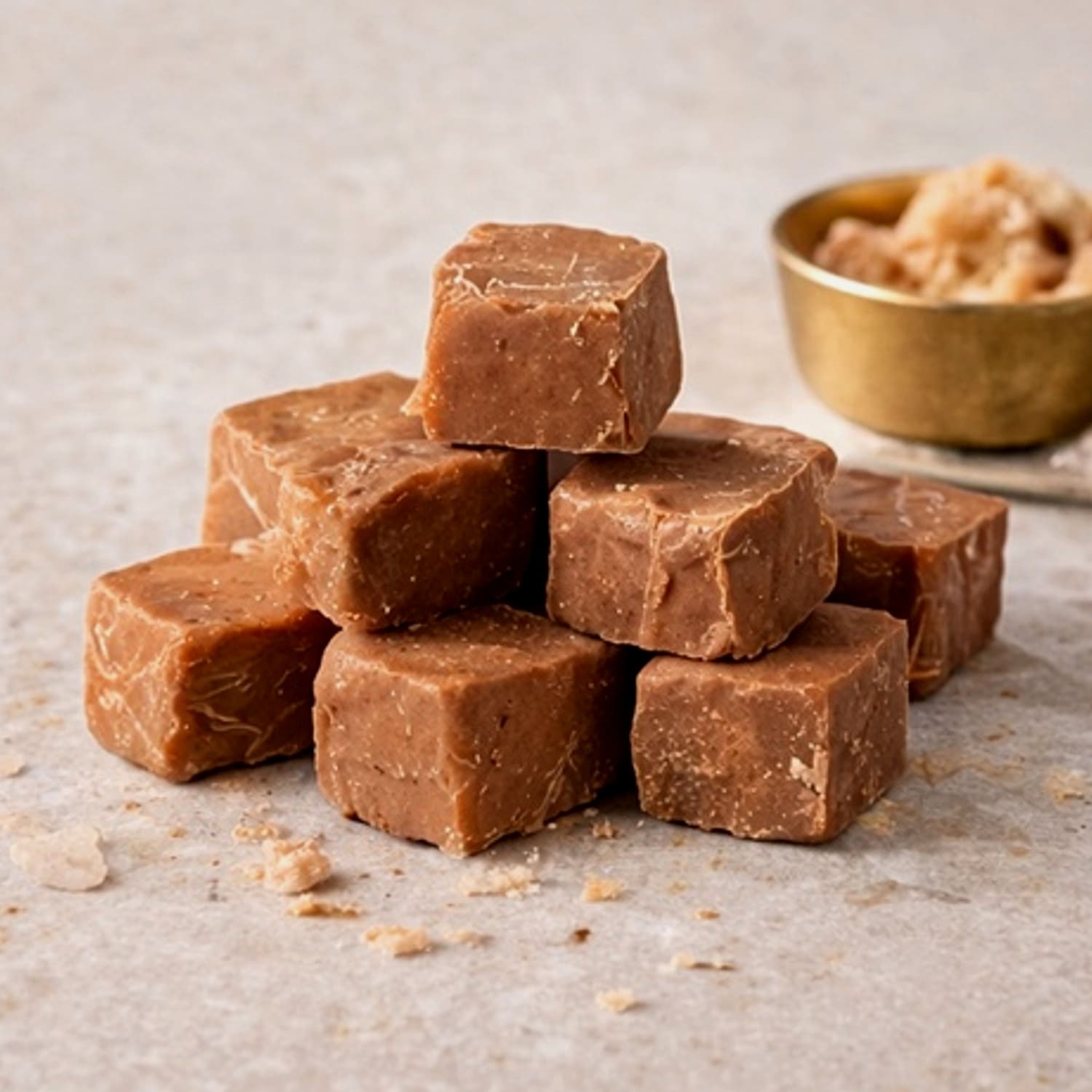
Lift the fudge out of the tin using the parchment overhang and put it on a chopping board. Cut into small squares with a sharp knife. About 2cm is the traditional size. Fudge is rich and a small piece goes a long way.
A Few Things That Can Go Wrong
Fudge has a reputation for being tricky. It isn't really. But a few common problems are worth knowing about in advance.
The fudge is grainy. Sugar crystals formed during cooking. Next time, make sure every grain has dissolved before you bring the pan to a boil, and don't stir too much once it's boiling.
The fudge didn't set. You didn't cook it for long enough. If you haven't got a thermometer, trust the cold-water test. If it's already set too soft, cut it up and use it as an ice cream topping.
The fudge set rock hard. Cooked for too long. Pull it off the heat a minute earlier next time.
It burned on the bottom. Heat too high or not enough stirring. A diffuser mat under the pan can help if your hob runs hot.
Flavour Variations
Once you've made a plain batch or two, it's worth trying a few variations. These are the ones we'd recommend starting with.
- Sea salt fudge. Stir in ½ tsp of flaky sea salt along with the vanilla. Sprinkle a little more on top before it sets.
- Belgian chocolate fudge. Add 100g of good-quality dark chocolate, broken into pieces, during the beating stage. Stir until fully melted through.
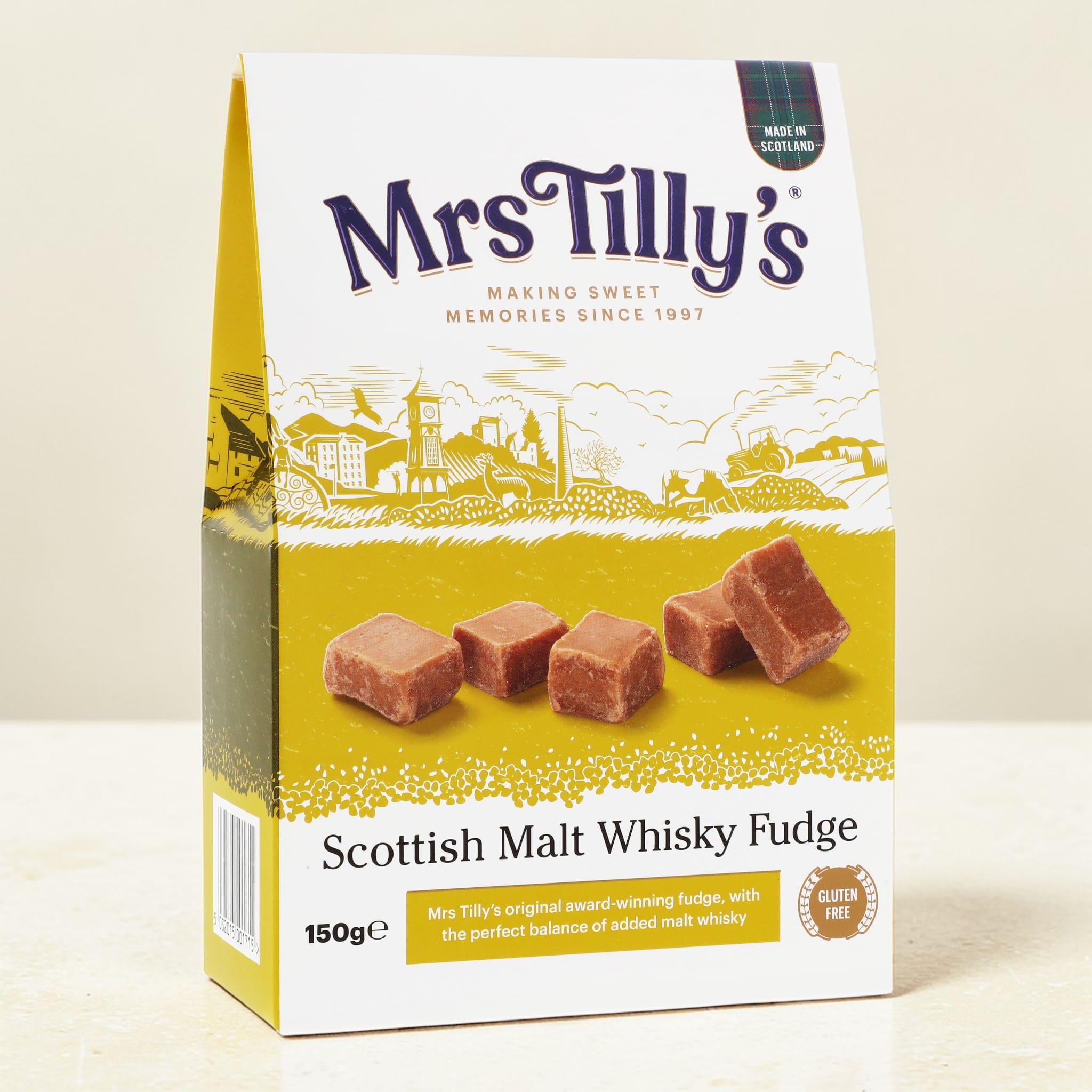
- Malt whisky fudge. Replace the vanilla with 1 tbsp of a good blended Scotch. A Scottish classic.
- Orange fudge. Add the finely grated zest of one orange to the pan at the start, then ½ tsp of orange extract during the beating stage.
- Rum and raisin. Soak 75g of raisins in 1 tbsp of dark rum for an hour, then fold them in at the beating stage.
If you like the process and want to try a firmer, crumblier Scottish cousin, our Scottish Tablet Recipe uses a similar method with a few key differences.
Storing Homemade Fudge
Kept in an airtight container at room temperature, homemade fudge will last two to three weeks. Avoid the fridge. The humidity softens the texture and dulls the flavour. For longer storage, you can freeze it: wrap pieces individually in greaseproof paper, put them in a freezer bag, and defrost at room temperature before serving. Some cooks find the texture turns slightly grainy after freezing, so it's always better fresh.
A tin of homemade fudge makes a lovely gift. Tie it with a ribbon and tuck a handwritten note inside. There's something about food made by hand that shop-bought treats can't quite match.
If You'd Rather Let Us Do the Work
Making fudge at home is a pleasure, but we understand if standing over a pan for half an hour on a Sunday isn't your idea of relaxing. We've been making small-batch Scottish fudge since 1997 using the same traditional method you've just read. Sugar, butter, condensed milk, patience, and the benefit of a few decades of practice.
Have a browse of the full Scottish Fudge collection, pick out a gift box for someone special, or try the Any 3 for £8.50 small gift boxes if you'd like to sample a few flavours.
Related: Fudge: A Complete Guide · The Process of Making Traditional Scottish Fudge
Free UK delivery on orders over £30. Same-day dispatch when you order by 1pm Monday to Wednesday.