
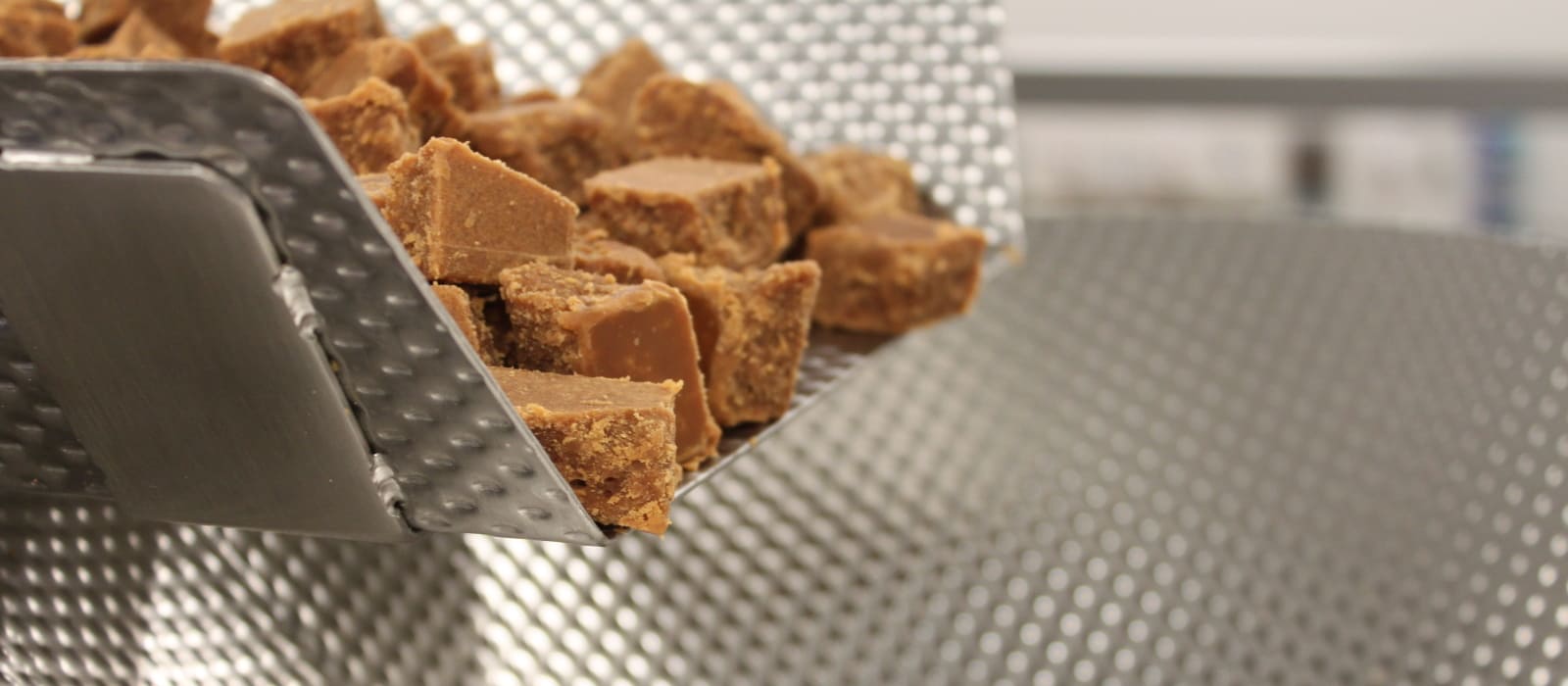

There's something about the smell of tablet on the boil - butter and sugar slowly turning to gold - that takes you straight to someone's kitchen. It's one of those recipes that sounds deceptively simple. Sugar, butter, condensed milk, patience. The ingredients are basic. The technique is where the magic happens, and where things can go wonderfully right or spectacularly wrong.
TL;DR: Traditional Scottish tablet is made by boiling sugar, milk, butter, and condensed milk to 118°C (soft ball stage), then beating the mixture until it thickens and turns slightly grainy before setting in a tray. The key to authentic tablet is achieving its signature crumbly texture - not the soft, creamy consistency of fudge.
Whether you're making tablet for the first time or trying to match what your granny used to make, this guide covers the full traditional method, the mistakes that catch people out, and a few things we've learned from years of making it professionally.
What Is Scottish Tablet?
First, let's clear something up - tablet is not fudge. The two get confused constantly, but they're quite different creatures. Fudge is soft, smooth, and creamy. Tablet has a distinctive crumbly, grainy texture and a deeper caramelised flavour. When it's right, it dissolves on the tongue in a way that nothing else quite manages. For the full history and cultural background, see our complete guide to Scottish tablet.
The difference comes down to temperature and beating. Tablet is boiled higher and beaten harder, which creates the tiny sugar crystals that give it that characteristic crumble. Get those two things right and you'll understand why Scotland has been making this sweet for generations.
Ingredients
Traditional Scottish tablet uses just a handful of simple ingredients. That's part of its charm - and part of the challenge. With so few components, the quality of what you use really matters.
- 1kg granulated sugar - always granulated, never caster. The coarser grain helps with the final texture.
- 250ml whole milk - full-fat is essential here. Semi-skimmed won't give you the same richness.
- 125g salted butter - the salt adds a depth that balances all that sweetness beautifully.
- 1 tin (397g) sweetened condensed milk - this is what gives tablet its rich, creamy character.
- A splash of vanilla extract (optional) - some families swear by it, others wouldn't dream of adding it. Both camps are right.
Equipment
You'll need a large, heavy-bottomed saucepan - bigger than you think, because the mixture bubbles up considerably. A wooden spoon, a sugar thermometer if you have one, and a lined or greased baking tin roughly 20cm x 30cm.
Step-by-Step Method
1. Prepare Your Tin
Line your tin with baking parchment or grease it well with butter. Do this before you start cooking. Once the tablet is ready, there's no time to be scrambling around - it waits for nobody.
2. Melt and Dissolve
Put the butter, sugar, and milk into your saucepan over low heat. Stir gently until the sugar has completely dissolved and the butter has melted. Take your time with this step. If any sugar crystals remain undissolved, they'll come back to haunt you in the finished texture.
3. Add the Condensed Milk
Once the sugar has fully dissolved, pour in the condensed milk and stir to combine. Turn the heat up to medium and bring the mixture to a gentle rolling boil. This is where the kitchen starts to smell incredible.
4. The Boil - Patience Is Everything
This is where many a batch of tablet has been lost. Keep the mixture at a steady boil, stirring constantly to stop it catching on the bottom of the pan. This stage takes around 20 to 30 minutes, and there are no shortcuts. Step away for a moment and you risk burning it.
If you have a sugar thermometer, you're aiming for 118°C - the soft ball stage. Without one, use the cold water test: drop a small amount of the mixture into a cup of cold water. If it forms a soft, pliable ball you can squish between your fingers, it's ready.
5. Beat It
Take the pan off the heat. Add vanilla if using. Now comes the crucial part - beat the mixture vigorously with your wooden spoon for around 10 minutes. You'll watch it thicken, turn paler, and start to develop that slightly grainy look. That's exactly what you want. The beating creates the sugar crystals that give tablet its signature crumble.
6. Pour and Set
Pour into your prepared tin quickly before it starts to set in the pan. Give it a gentle shake to level out. Score the top with a knife after about 10 minutes, marking your pieces while it's still slightly soft. Then leave it to cool completely - a few hours, or overnight if you can resist the temptation.
Common Mistakes and How to Avoid Them
Too soft and fudgy: It hasn't been boiled long enough or didn't reach the right temperature. A thermometer takes the guesswork out - make sure you're hitting 118°C.
Rock hard: Overcooked. The mixture went past soft ball stage into hard ball territory. When in doubt, test early with the cold water method.
Burnt on the bottom: The heat was too high or the stirring stopped for too long. A heavy-bottomed pan makes a real difference here, and you cannot stir too much.
Won't set: Usually a beating issue. It needs a full 10 minutes of vigorous beating. Your arm will ache. An electric hand whisk works perfectly well if that's more your style.
Tips From the Mrs Tilly's Kitchen
- Use a bigger pan than you think - boiling sugar overflowing on a hob is not something anyone wants to deal with.
- Don't rush the dissolving stage. Undissolved sugar is the number one cause of poor-textured tablet.
- Weather matters. Humid days make tablet harder to set, so pick a dry day if you can.
- Store in an airtight container lined with parchment and it keeps well for up to two weeks.
- Tablet freezes beautifully, making it a great option for make-ahead gifts and special occasions.
Variations Worth Trying
Once you've nailed the classic, there's room to get creative. Chopped walnuts stirred through just before pouring give a satisfying crunch. Whisky tablet is a Scottish favourite - add a tablespoon of your preferred single malt during the beating stage. Desiccated coconut works well too, and folding in a ribbon of salted caramel brings a modern twist to a very traditional sweet.
Rather Leave It to Us?
We'll be the first to admit that making perfect tablet takes practice - and a fair bit of patience. If you'd rather skip straight to the enjoyment, our handmade Scottish tablet is made in small batches using the same traditional methods and proper ingredients. The 150g gift box is a good place to start, or explore the full range if you already know what you like.
Whether you make your own or let us do the work, Scottish tablet is worth the effort. The recipe hasn't changed because it doesn't need to. Sugar, butter, condensed milk, patience, and skill. That's all it takes to make something that's been bringing people together in Scottish kitchens for generations.