
Scottish confectionery is one of those quiet cultural categories that hides behind bigger stories. Whisky gets the international attention. Shortbread gets the biscuit-tin marketing. Haggis gets the eyebrow raise on menus abroad. But the small pieces of sweet, buttery, boiled-sugar craftsmanship that Scotland has been making for centuries — tablet, fudge, macaroon bars, honeycomb, tea cakes — get on with things without much fuss.
This guide is a proper walk-through of the category. What Scottish confectionery actually means, the three products that anchor it, what makes it distinct from English or American traditions, where it sits in Scottish life, and how to buy it well. Mrs Tilly's has been making handmade Scottish sweets in small batches in Scotland since 1997, so we've had plenty of time to think about all of it.
What Scottish Confectionery Means
Scottish confectionery is the umbrella term for the sweet things Scotland has traditionally made — mostly from sugar, butter and dairy, mostly boiled, mostly by hand in small batches. It sits alongside baking (shortbread, oatcakes, black bun) and drink (whisky, Irn-Bru, tea) as one of the pillars of Scottish food culture, but it's the least written-about of the three.
The category has a few defining features. It leans heavily on butter and dairy. Recipes tend to be short — a handful of ingredients, not a long list. Most Scottish confectionery is made by boiling sugar to a particular stage and then beating or setting it as it cools. And most of it has been part of Scottish life for at least a century, often much longer.
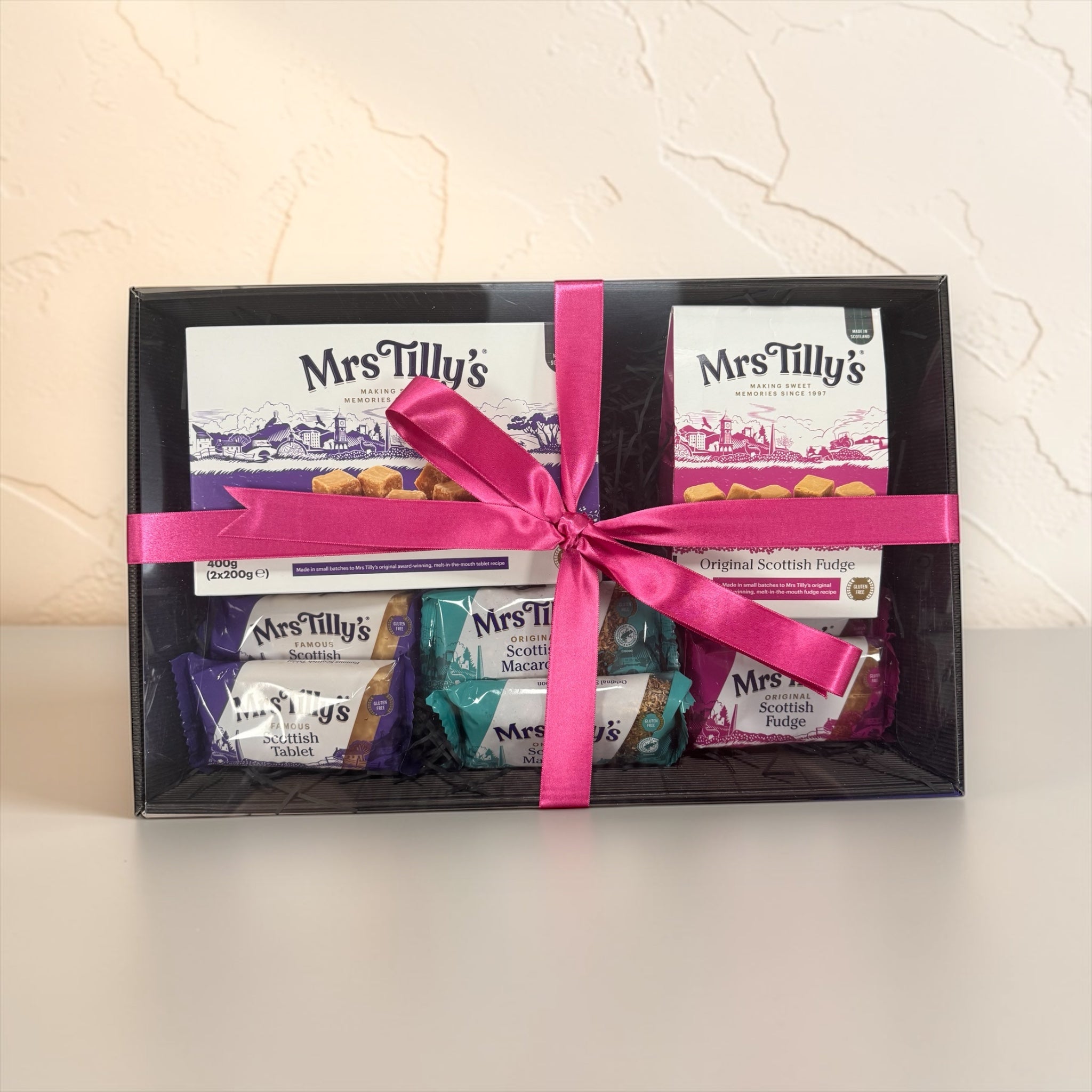
Three products anchor the category: tablet, fudge, and the Scottish macaroon bar. Everything else — honeycomb, tea cakes, boiled sweets, Edinburgh rock — orbits around those three.
The Three Cornerstones
Scottish Tablet
Tablet is the most distinctively Scottish sweet on the list. Firm, crumbly, sugar-forward, with a caramelised flavour and a texture that dissolves on the tongue rather than sitting on it. If you've never had proper tablet, the closest reference point is fudge — but firmer, more brittle, more intensely sweet.
Traditional Scottish tablet is made from sugar, butter and sweetened condensed milk. The mixture is boiled to the "soft ball" stage — around 116°C — and then beaten as it cools until it sets with that distinctive grainy, crystalline texture. The beating is the point; it's what gives tablet its melt-in-the-mouth quality.
Mrs Tilly's tablet uses the same traditional method with our own proper recipe: sugar, whole milk, salted butter, sweetened condensed milk and glucose syrup. Every batch is gluten-free and made with no artificial flavourings.
Tablet has been part of Scottish food culture for around 300 years. It's older than fudge by some margin. If you'd like to go deeper, we've written everything you need to know about Scottish tablet in a separate guide, and there's a full traditional tablet recipe if you'd like to make it yourself.
Scottish Fudge
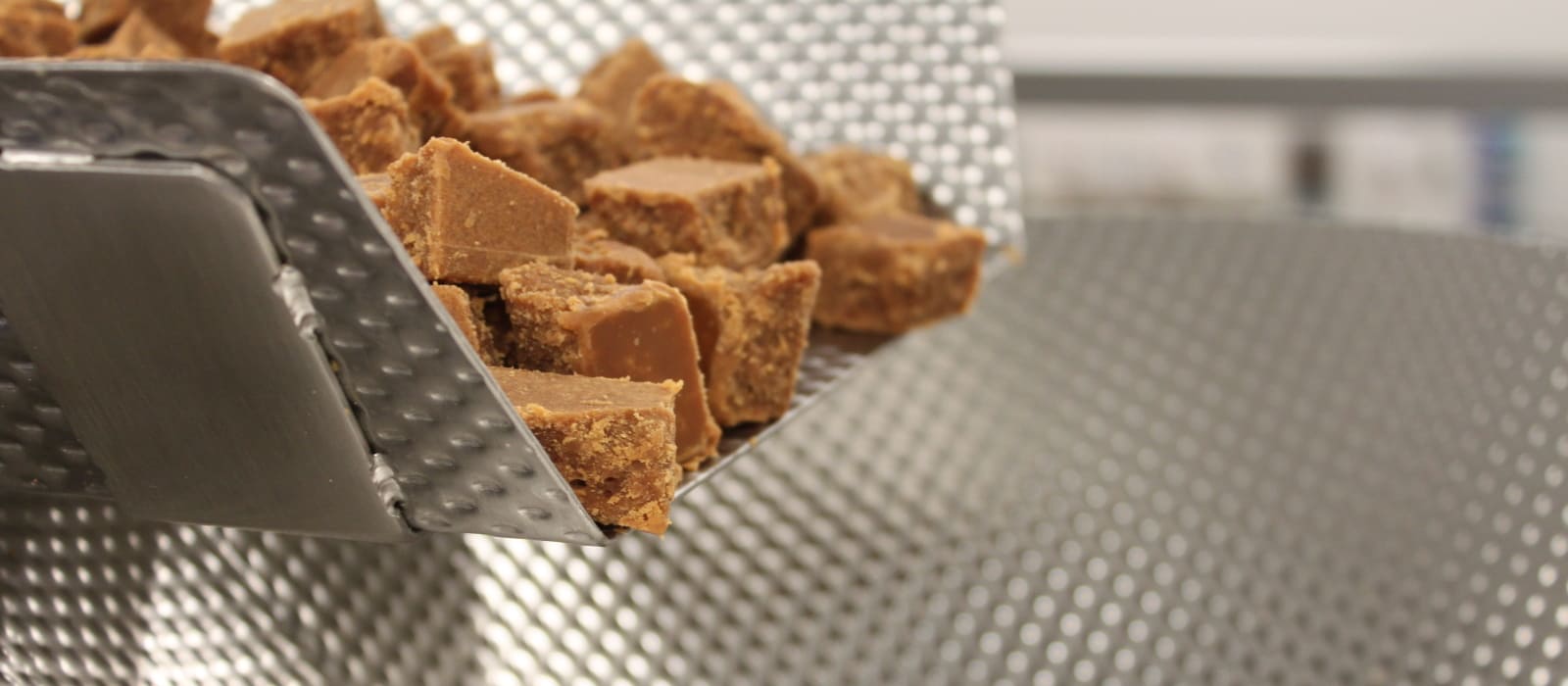
Fudge is softer, creamier and less sweet than tablet. Where tablet snaps, fudge yields. Where tablet fills the mouth with sugar crystals, fudge coats it with butter and cream.
Scottish fudge uses sweetened condensed milk as its base — different from English fudge, which is often made with plain milk, and very different from American fudge, which tends to be chocolate-dominated. The condensed-milk method gives Scottish fudge a smoother, creamier texture that most people prefer once they've tried it side by side.
Mrs Tilly's makes fudge in several traditional flavours: Original for the classic, Sea Salt for a slightly more grown-up take, Belgian Chocolate for chocolate lovers, Malt Whisky with real Scotch stirred through, Rum and Raisin, and Orange.
For a longer look at the fudge category — the differences between Scottish, English and American styles, the flavour range, and how it's made — see the Complete Guide to Fudge and the Scottish fudge recipe.
Scottish Macaroon Bars
The Scottish macaroon bar is the least obvious of the three. Not to be confused with the French macaron (small, colourful, meringue-based) or the English coconut macaroon (a small round biscuit), the Scottish macaroon bar is its own distinctive thing: a soft, sweet fondant centre coated in dark chocolate and rolled in desiccated coconut.
The result is a chewy, chocolatey, coconut-textured bar that has almost nothing to do with either of its confusingly-similarly-named cousins. Mrs Tilly's macaroon bars have been made in our Larbert kitchen for nearly thirty years, using dark chocolate at 56% cocoa solids and a proper fondant centre.
If you'd like to know how the Scottish macaroon came to exist as its own thing, we've written the history of Scottish macaroons separately. The short version: it was reportedly invented by a Glasgow confectioner in the 1930s and has been made the same way ever since.
What Makes Scottish Confectionery Distinct
A few things set the Scottish tradition apart from the English or American ones.
Dairy-led rather than chocolate-led. English confectionery leans heavily on chocolate as a base flavour — think Cadbury, Rowntree, Terry's. Scottish confectionery starts with butter, milk and cream. Chocolate is a flavour that appears (in macaroons, in some fudge variations, in tea cakes) but it's not the default.
Boiled sugar as a method. Most of the category involves boiling sugar to a specific temperature. That's a craft skill that rewards patience and attention, and it's why small-batch producers still hold their own against industrial makers. A cheaply-made mass fudge doesn't taste the same as one made by someone watching a heavy-bottomed pan for half an hour.
Short ingredient lists. Most traditional Scottish confectionery is made from a handful of ingredients you'd find in any kitchen — sugar, butter, condensed milk, sometimes a spirit or a flavouring. There's no long paragraph of preservatives, colouring or stabilisers.
Regional variation. Different parts of Scotland have their own takes. The Highlands often add whisky. Coastal areas lean into salt. Central-belt producers stick closer to the original recipes. It's not a monolithic category.
A quieter identity. Scottish confectionery has never been marketed with the same volume as English chocolate or American candy. Most producers are small, family-owned, and content to make their thing well without a lot of noise. That's part of the charm.
Where Scottish Confectionery Fits in Scottish Life
Sweet treats sit at specific moments in the Scottish calendar. Understanding these helps explain why the category has survived where other regional food traditions have thinned out.
Burns Night (25 January). The birthday of Robert Burns has become a national food occasion. Haggis, neeps and tatties are the main event, but tablet and fudge often appear at the end — a small piece with a dram of whisky, or served alongside coffee at the end of the evening.
Hogmanay (31 December). The Scottish new year is bigger than Christmas in most Scottish homes. First-footing traditions, ceilidh dances, and long evenings of hosting all involve sweets. Tablet is particularly associated with Hogmanay — a small piece for luck, a gift for the first-foot.
Weddings. Scottish tablet and fudge as wedding favours is a well-established tradition. Small boxes at place settings, larger jars for the sweet cart, and the tie-in to the "shared sweetness" symbolism of the quaich cup.
Highland Games and summer gatherings. Sweets are often part of the outdoor food culture — travelling well, keeping in the sun, portioning easily.
Afternoon tea. As covered in our afternoon tea guide, Scottish sweets pair beautifully with strong black tea. The pairing is centuries old and has never really needed marketing.
Christmas gifting. Increasingly, tablet and fudge appear in Scottish Christmas hampers — both as gifts to family in Scotland and as "taste of home" parcels sent to Scottish expats elsewhere in the UK.
Everyday. More quietly, Scottish confectionery is part of ordinary kitchen life. A tin on the shelf, a small piece with a mid-afternoon cup of tea, something to keep for a rainy day. The everyday version is probably the most important one.
The Ingredients Tradition
Traditional Scottish confectionery uses ingredients you'd expect in any 19th-century Scottish kitchen: sugar (usually cane), butter, whole milk, condensed milk, glucose syrup, and — depending on the sweet — chocolate, coconut, whisky, or fruit.
The rule of thumb, both traditionally and at Mrs Tilly's, is that real butter and real dairy are non-negotiable. Cheaper industrial confectionery often substitutes vegetable fat for butter and uses glucose syrup or high-fructose corn syrup as a shortcut. It's one of the reasons supermarket-brand tablet often tastes noticeably different from proper small-batch tablet — the base is different.
All Mrs Tilly's tablet, fudge, macaroon bars and popcorn are naturally gluten-free. The only allergen we use across most of the range is milk. Macaroon bars additionally contain soya (in the dark chocolate). Ingredients labels on each product page carry the full detail.
What Else Belongs Under Scottish Confectionery
Beyond the three cornerstones, a wider Scottish confectionery family includes:
Honeycomb. Sometimes called cinder toffee or hokey pokey. Made by boiling sugar with bicarbonate of soda to create the aerated, brittle texture. Sometimes chocolate-coated, often served on its own.
Tablet popcorn and traditional bars. Modern reinterpretations of traditional flavours. Our traditional bars range brings tablet and fudge into a portable everyday-snack format.
Boiled sweets. Edinburgh rock is the classic — a soft, crumbly boiled sweet made in narrow sticks. Berwick cockles, Jethart snails, and Hawick balls are regional survivals from smaller towns.
Tea cakes and Tunnock's-style teacakes. A marshmallow dome on a biscuit base, coated in chocolate. Not strictly confectionery but they live in the same tin.
Chocolate honeycomb. Small pieces of honeycomb coated in milk chocolate — a properly Scottish variation on the classic.
Shortbread and other baked sweets. Adjacent rather than core — shortbread is a baked good, not a confectionery — but it often gets grouped with the sweets on a gift table.
For a shortcut to try the range, our bundles and 1kg bags let you sample the classics without having to buy each product individually.
How to Buy Scottish Confectionery Well
A few pointers for buying Scottish confectionery, whether it's for yourself, a gift, or a wedding table.
Look for small-batch, named producers. Mass-produced tablet or fudge tends to taste different from small-batch handmade versions. If the label doesn't mention the maker or method, the odds are it's industrial.
Check the ingredients list. Real butter, real dairy, minimal additives. If vegetable fat, hydrogenated oils or long lists of preservatives appear, it's a shortcut version.
Fresh is better. Both tablet and fudge are best within a few weeks of being made. Products with best-before dates over a year out have usually been treated to extend shelf life at the expense of texture.
For gifts, look at the presentation. Small-batch Scottish confectionery tends to arrive in properly designed boxes or tins rather than plastic packaging. If the presentation feels considered, the product usually matches.
Buy from Scotland. Not out of purism — but the best small-batch producers still work in Scottish kitchens with Scottish suppliers, and the freshness pays off.
Mrs Tilly's has been making handmade Scottish confectionery in Larbert since 1997. Our full Scottish tablet range, Scottish fudge collection, macaroon bars and gift boxes are all available online with free UK delivery over £30.
Frequently Asked Questions
What is Scottish confectionery?
Scottish confectionery is the collective name for the traditional sweet treats made in Scotland — tablet, fudge, macaroon bars, honeycomb, boiled sweets and related items. Most are made from a short list of ingredients (sugar, butter, dairy) using traditional boiling and setting methods that go back centuries.
What is the most famous Scottish sweet?
Scottish tablet is probably the most distinctively Scottish sweet — firmer and more crystalline than fudge, with a caramelised, buttery flavour. It's been part of Scottish food culture for around 300 years and appears at Burns Night, Hogmanay, weddings and everyday tea.
What's the difference between Scottish tablet and Scottish fudge?
Tablet is firmer, crumblier and more intensely sweet. Fudge is softer, creamier and more butter-forward. The difference comes down to how they're beaten and cooled after boiling — tablet crystallises, fudge stays smooth. Different ingredients, different method, different textures.
Are Scottish sweets gluten-free?
Traditional Scottish tablet, fudge and macaroon bars are naturally gluten-free — they're made from sugar, butter and dairy without any wheat. All Mrs Tilly's tablet, fudge, macaroon and popcorn ranges are gluten-free.
What is a Scottish macaroon bar made of?
A Scottish macaroon bar has a soft, sweet fondant centre coated in real dark chocolate and finished with a generous roll of desiccated coconut. It has no relation to the French macaron or the English coconut macaroon biscuit.
Where can I buy proper Scottish confectionery online?
Small-batch Scottish producers like Mrs Tilly's ship directly across the UK. Buying from a producer rather than a supermarket usually means fresher product, cleaner ingredients, and a properly presented gift box if you need one. Free UK delivery on Mrs Tilly's orders over £30.
Where to Start
If you're new to Scottish confectionery, the Any 3 for £8.50 selection is the easiest way in — pick three flavours across tablet, fudge and macaroon and you'll have a proper sense of the category in one order.
For a gift, the 400g gift boxes look properly presented straight from the box. For a bigger occasion — hosting, sharing, sending home — the bundles and 1kg bags collection covers everything from wedding favours to family Christmas.
For the everyday version, a single 150g box on the kitchen shelf lasts a fortnight of proper five-minute tea breaks. That's honestly what Scottish confectionery is for.
Related guides: Fudge — A Complete Guide · Scottish Tablet — All You Need to Know · The History of Scottish Macaroons
Order by 1pm Monday to Wednesday for same-day dispatch, and free UK delivery on orders over £30. Made in Scotland since 1997.